
By Kathy Beardsley
After reading various articles representing preterist, historicist, and futurist perspectives, as well as statements from respected pastors like Matthew Henry and insights from other religions, I find myself unable to agree with their conclusions. Many from the first two groups interpret the star called Wormwood (Rev. 8:10) as a fulfilled prophecy of judgment that occurred at some point in history after the beginnings of the early church though their views differ on what that judgment entails. The futurists (who include dispensationalists) believe Wormwood will fall during what they identify as the Great Tribulation in the end times. My interpretation takes a different approach and offers a fresh perspective. I look to scripture to identify the star itself and argue that, apart from its fall from heaven, it is not tied to a single event. Instead, it represents an ongoing repercussion and consequence— the ripple effect of wickedness that began with its fall and will continue until Jesus returns. If my understanding is correct, the star called Wormwood fell long before the early church era.
In its physical form wormwood is defined as:
Wormwood: (Deuteronomy 29:18; Proverbs 5:4; Jeremiah 9:15; 23:15; Lamentations 3:15, 19; Amos 5:7; Revelation 8:11)
#3939 Hebrew לענה la‘anah lah-an-aw′; from an unused root supposed to mean to curse; wormwood (regarded as poisonous, and therefore accursed):—hemlock, wormwood.
#894 Greek ἄψινθος apsinthos ap′-sin-thos; of uncertain derivation; wormwood (as a type of bitterness, i.e. [figuratively] calamity):—wormwood. (Strong’s Concordance)
“It is often mentioned, but only by way of metaphor. Several varieties of Artemisia grow in Israel. Wormwood is well known for its bitter taste.” Other botanical names existing in Bible times are: Artemisia Judaica, Artemisia Nilotica and Artemisia absinthium. (Bible Helps, Sunday School Teacher’s Edition Bible 1880’s*). (emphasis added)
Hemlock: (Hosea 10:4; Amos 6:12)
- Heb. rosh Hosea 10:4 rendered
- “gall” in Deut. 29:18; 32:32; Ps. 69:21; Jer. 9:15; 23:15
- “poison,” Job 20:16
- “venom,” Deut. 32:33 “Rosh is the name of some poisonous plant which grows quickly and luxuriantly; of a bitter taste, and therefore coupled with wormwood Deut. 29:18; Lam. 3:19. Hence it would seem to be not the hemlock cicuta, nor the colocynth or wild gourd, nor lolium darnel, but the poppy so called from its heads” (Gesenius, Lex.).
- Heb. la’anah, generally rendered “wormwood” (q.v.), Deut. 29:18; Prov. 5:4; Jer. 9:15; 23:15. Once it is rendered “hemlock” Amos 6:12 R.V., “wormwood”. This Hebrew word is from a root meaning “to curse,” hence the accursed.
There are eight references for wormwood; all but one are in the Old Testament. The eighth is found in the book of Revelation. If a bitter, inedible plant like wormwood can be used metaphorically, why not a star? When applying consistency in scripture one can expect that if a literal object is used as a symbolic description, especially when it is used more than once in that way, it should be clearly seen and acknowledged. Wormwood is one of those objects, the star is another. Let’s look at some examples for the star.
Genesis 37:9 “the eleven stars made obeisance to me.” Joseph’s dream about his eleven brothers.
Numbers 24:17 “there shall come a Star out of Jacob” is clearly not literal. Jesus, the bright and morning star (Rev. 22:16) is born through the generational line of Jacob.
Jude 1:13 “wandering stars, to whom is reserved the blackness of darkness for ever.” To know the identity of the wandering stars read verses 4-8.
Rev. 1:16 “And he had in his right hand seven stars:” 20 “The seven stars are the angels [pastors] of the seven churches:”
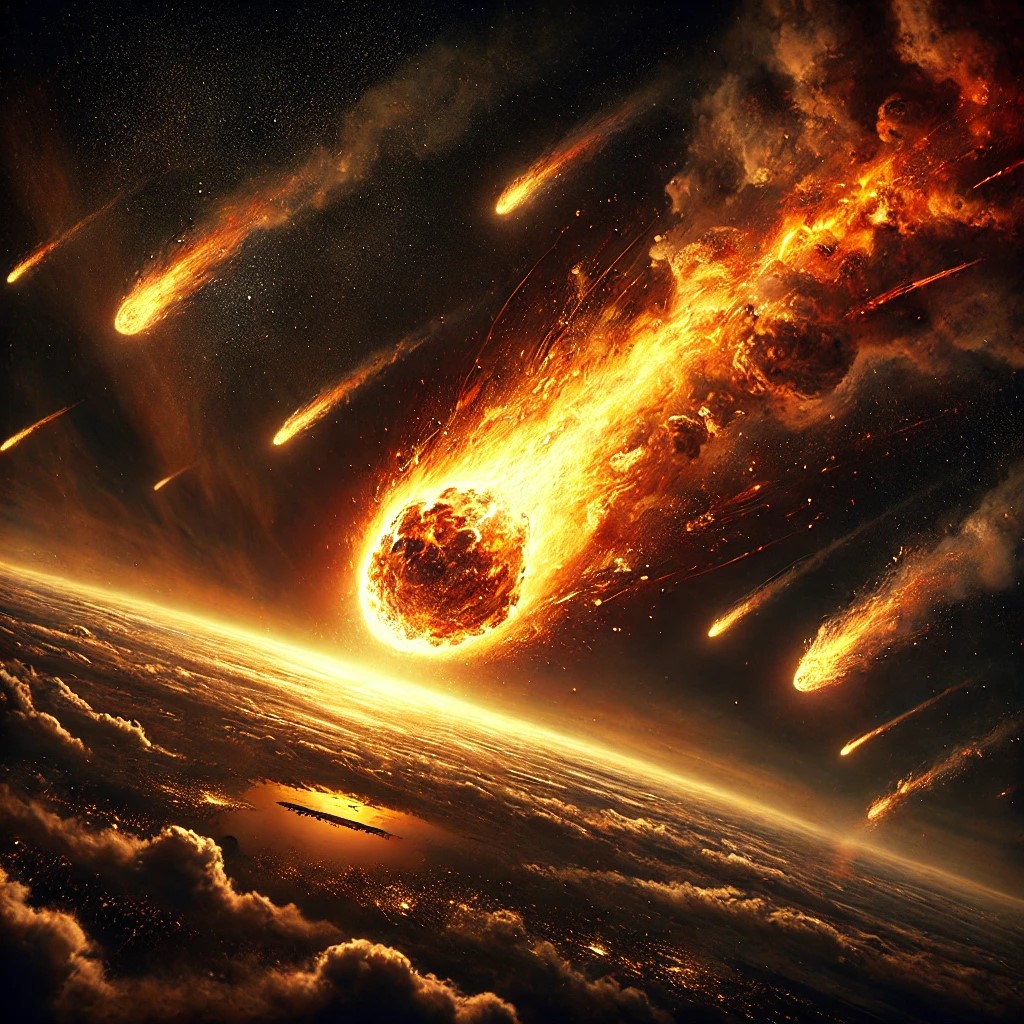
Rev. 8:10 “there fell a great star from heaven,” 11 “the name of the star is called Wormwood:”
Rev. 12:1 “and upon her head a crown of twelve stars:” (“her” is Israel; the twelve stars refer to the twelve sons of Jacob who are the heads of the twelve tribes of Israel).
Rev. 12:4 “the third part of the stars of heaven,” fallen angels
Now to the verses in question:
“And the third angel sounded, and there fell a great star from heaven, burning as it were a lamp, and it fell upon the third part of the rivers, and upon the fountains of waters; And the name of the star is called Wormwood: and the third part of the waters became wormwood; and many men died of the waters, because they were made bitter.” Revelation 8:10, 11 (emphasis added)
The first and most natural thought that comes to mind is that the star called “Wormwood” is a literal falling star that contaminates the literal waters upon impact from its fall. Allow me to make a relevant deviation for a moment. For all this to make sense, you need to also know that “waters” in the above verse is also symbolic—of a large number of people. Rev. 17:15 gives us an example, “And he saith unto me, The waters which thou sawest, where the whore sitteth, are peoples, and multitudes, and nations, and tongues.” A third part of men were made bitter (corrupt; accursed along with Satan and a third part of his angels a.k.a. demons) and many men died because of them. That is one of the reasons why we see the exclamation of “Woe to the inhabitants of the earth and of the sea! For the devil is come down unto you, having great wrath” Rev. 12:12. In contrast to those who hold to the literal and judgment views previously stated there is a small group who equate the star called “Wormwood” as metaphorically referring to Satan because of his puffed up pride and bitterness of heart that led to his expulsion from heaven.
To aid in determining the correct answer I would like to focus on a point or two that may or may not have ever been brought into question. First, why do you suppose wormwood is capitalized only in this verse and only once since it is used twice? Could it be that it is metaphorically describing Satan? Since he is not specifically named, could it be the name of the star is capitalized to tell us a person is being described? In comparison, Jesus calls himself the bright and morning star Rev. 22:16 which is not capitalized because Jesus IS named and so his description of himself does not need to be capitalized, and, Jesus is still in heaven!
Second, just as Jesus has more than one title and is known by His righteousness and glory, so Satan has more than one title and is known for his evil wickedness; walking about as a roaring lion seeking whom he may devour 1 Peter 5:8. The “great red dragon” first spoken of in Rev. 12:3 and again in verse 9 clearly identify and describe him by more than one name—old serpent, Devil and Satan, just add Wormwood to the list. Take into consideration too, that the word “great” is used to describe both the dragon and the star called Wormwood. This means Satan is at the top of his wicked spiritual hierarchy and commanding those under him, including the fallen star/angel at the sounding of the fifth trumpet.
I suspect that greatly due to C. I. Scofield’s interpretation in his commentary notes (most people don’t realize just how much has been taught from his commentary notes), many have concluded that Satan is the fallen star at the fifth trumpet Rev. 9:1. Let me walk you through how he came to his conclusion. Scofield has no commentary notes for Revelation chapters 8-11, but he managed to imply a great deal through his cross references. He connects Rev. 8:10 to 9:1 and then incorrectly connects 9:1 to Isaiah 14:12 for a positive identification. He did that because the first sentence says, “How art thou fallen from heaven, O Lucifer, son of the morning.” The clear implication is he considers “Lucifer” as another name for Satan. If he had read and kept that sentence in context with surrounding verses and the whole story in general, he would not have come to that conclusion. Lucifer has never been another name for Satan. See my article Is Lucifer another name for Satan? for more details.
The star at the fifth trumpet cannot be Wormwood for more than one reason—the simplest being that the trumpets are independent of each other so it would not make sense for one star to fall at the third angel’s trumpet, go back to heaven and fall again at the fifth trumpet. Neither is there any indication that the fifth trumpet star is a continued description of the third trumpet star. Aside from this, the fallen star at the fifth trumpet is given power and authority of the bottomless pit and made king of its inhabitants, Rev. 9:11. He is also given the name (Abaddon by the Hebrew) meaning destruction, and (Apollyon by the Greek) meaning destroyer. Saul was made king of the people (1 Samuel 9:17; 10:23) and the archangel Michael is a chief prince who carries out his LORD’S commands, Daniel 10:13; 10:21; Jude 1:9; Rev. 12:7, but Jesus holds a higher rank still, and God the Father the highest authority over all. It is worth considering the possibility (I believe probability) that the fifth trumpet angel is just one of Satan’s commanding officers and not Satan himself. There is clearly a spiritual status of rank and though it may not be plainly spelled out, does it not make sense that it exists in Satan’s realm as well as in the Heavenly Father’s? Based on scripture, the evidence provided is strongly in favor of Satan being metaphorically referred to as the great star called Wormwood.
Before I conclude this subject, I would like a final thought to be considered. The likelihood of Satan being the great star called Wormwood also indicates that the trumpets were blown ages ago since it was ages ago when his expulsion occurred—the affirmation is Jesus’s declaration in Luke 10:18 (written before Revelation), “I beheld [watched] Satan as lightning fall from heaven.” Because Jesus declared, “I beheld” (past tense) without including others, that is a good indication he witnessed it from heaven before his birth on earth. The only thing left to conclude is Wormwood occurred and was fulfilled in the past before Jesus declared witnessing it so no one living at the time of his declaration saw it neither will anyone in the future.
 Truth with Snares!?
Leave a comment